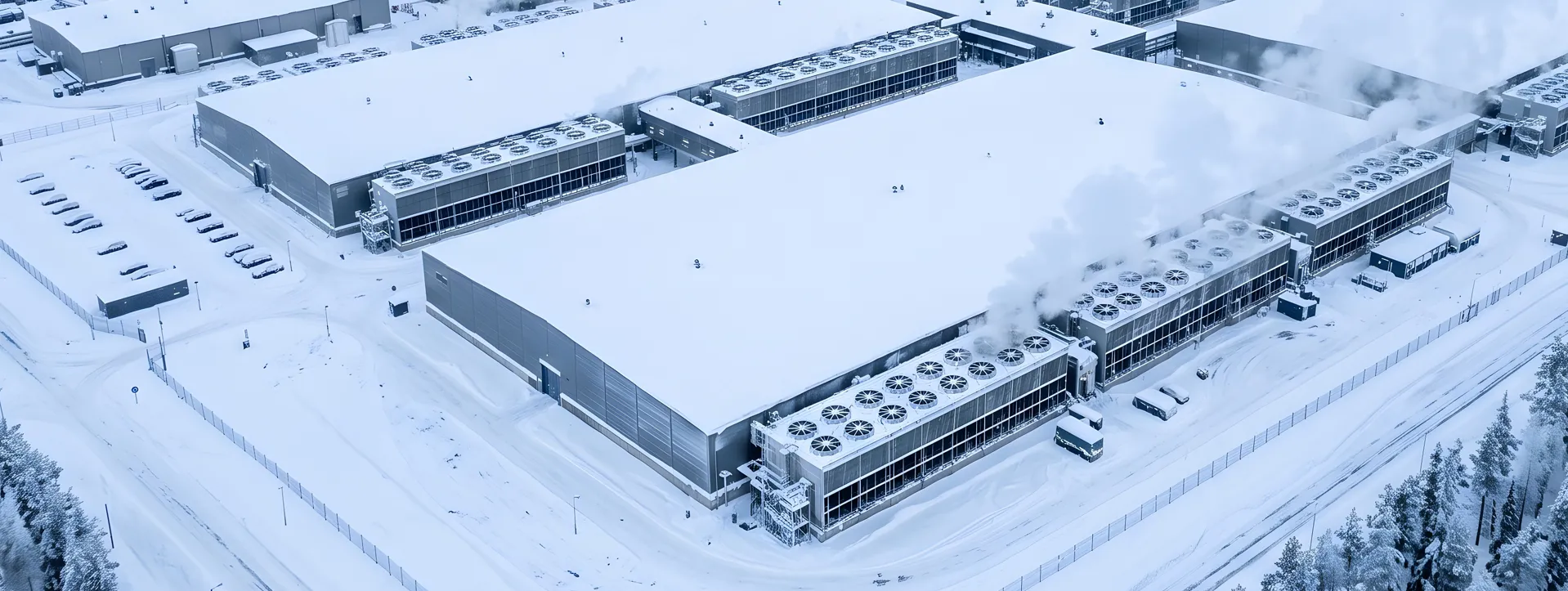
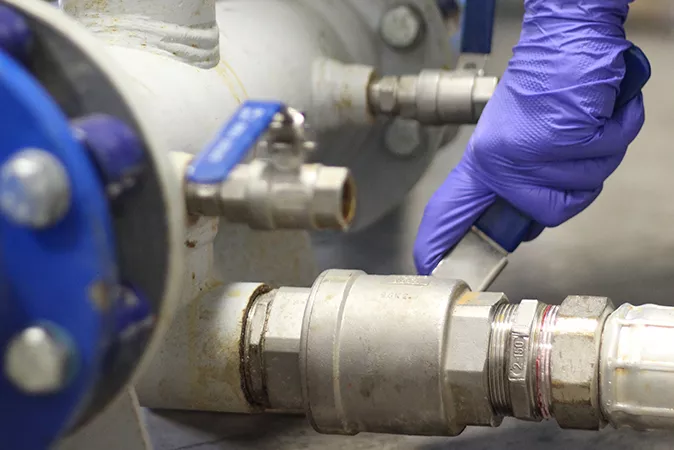
Effective winter protection means understanding the type, concentration and condition of the chiller glycol, the quality of the water within the system and whether the cooling circuit itself is clean and operating as intended.
For Hydratech, this is where fluid expertise, laboratory analysis and specialist engineering come together.
1. Check the actual glycol concentration
The first question is straightforward:
Does the system contain enough glycol to protect it against the temperatures it could experience?
The answer should be based on testing rather than assumption.
Systems can gradually lose their original glycol concentration through water top-ups, leaks, maintenance interventions or previous remedial work. The concentration recorded when the system was commissioned may therefore be very different from the concentration circulating several years later.
Too little glycol can leave exposed sections of the system vulnerable to freezing. Ice formation can restrict or completely block circulation, while expansion during freezing can place pipework, valves, heat exchangers and other components at risk of physical damage.
Too much glycol is not the answer either.
Increasing glycol concentration unnecessarily can increase viscosity, raise pumping demand and reduce heat transfer performance. The objective should be to establish the correct level of freeze protection for the application without compromising year-round cooling efficiency.
That means measuring what is actually in the system and correcting the concentration where required.
2. Glycol concentration doesn't tell you everything
A glycol reading is important, but it provides only part of the picture.
Industrial cooling fluids operate continuously within an environment containing different metals, seals, pipework, pumps, heat exchangers and other system components. Over time, the fluid can be affected by contamination, dilution, corrosion, inhibitor depletion and changes in water chemistry.
A system can therefore have an apparently acceptable glycol concentration while the overall condition of the coolant is deteriorating.
This is why Hydratech recommend the use of fully inhibited thermal fluids, formulated to provide corrosion, scale and biological protection as well as freeze protection.
Before winter, operators should understand not simply whether glycol is present, but whether the fluid remains suitable to protect both the cooling process and the equipment it circulates through.
3. Water quality matters
In a glycol/water cooling system, the water should never be treated as just a carrier for the antifreeze.
Its quality has a direct influence on the long-term condition of the coolant and the system.
Repeated topping-up with unsuitable water can alter glycol concentration, dilute inhibitor levels and introduce contaminants into the circuit. Poor water chemistry can contribute to scale formation, corrosion, suspended solids and biological activity.
These problems can then affect heat transfer surfaces and restrict smaller waterways, strainers, valves and heat exchangers.
Winter therefore provides a useful trigger for a wider question:
What is the actual condition of the fluid circulating through the chiller?
Correcting the glycol percentage without understanding the condition of the water and treatment chemistry may address freeze protection while leaving other problems untouched.
4. Watch for dilution and unexplained fluid loss
A falling glycol concentration can be a symptom rather than the root cause.
If a system has required repeated water top-ups, the reason needs to be understood. Leakage, maintenance activities, expansion issues or other losses can progressively dilute both the glycol and its protective inhibitor package.
Simply adding more glycol may restore the concentration temporarily, but it does not necessarily resolve the underlying issue.
Tracking fluid condition over time can identify trends that a single annual check can miss.
This is one of the main advantages of a structured fluid monitoring program: results become part of the system's maintenance history rather than an isolated snapshot.
5. Fluid condition and flow go hand in hand
Freeze protection also depends on the fluid being able to circulate effectively.
Corrosion products, scale, sediment and other contaminants can accumulate within a closed-loop cooling system. These deposits can increase hydraulic resistance, restrict flow and reduce heat transfer efficiency.
Low-flow sections, standby circuits and exposed areas of pipework can be particularly important during periods of low ambient temperature.
A winter readiness assessment should therefore consider the condition of the cooling circuit as well as the properties of the fluid.
Where contamination or poor system condition is identified, remedial measures can include cleaning, flushing, filtration, fluid treatment or other engineering interventions.
Fluid Monitoring: know what's happening inside the system
Hydratech's Fluid Monitoring Program (FMP) provides a structured way to monitor the condition of industrial cooling fluids and identify potential problems before they develop into system failures.
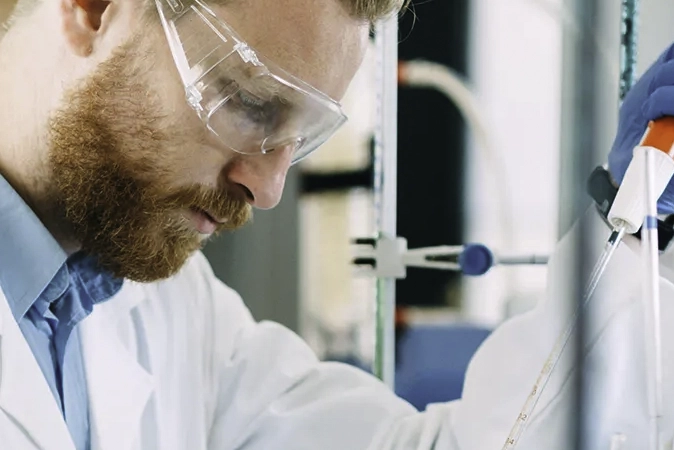
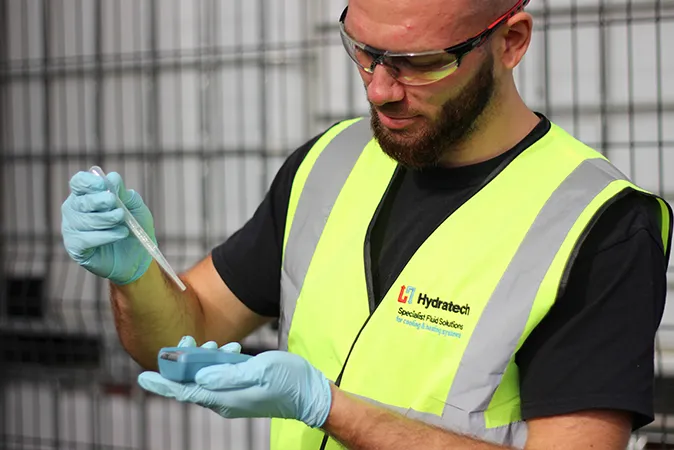
Fluid samples are analysed by Hydratech's in-house laboratory, helping operators establish the condition of both the coolant and the system in which it is operating.
Testing can provide insight into areas including glycol concentration, water chemistry, inhibitor condition, contamination and indicators of corrosion or biological activity.
Rather than waiting for poor cooling performance or equipment problems to become visible, regular analysis creates an opportunity to identify changes early and take corrective action.
For winter protection, that means knowing whether the system is actually prepared for falling ambient temperatures, rather than assuming that it is.
From fluid analysis to engineering action
Identifying a problem is only useful if something can then be done about it.
Hydratech's Services Division combines expertise in thermal fluids, water-treatment chemistry and mechanical engineering to support the ongoing operation and optimisation of industrial cooling and heating systems.
Where analysis identifies an issue, Hydratech can help determine the appropriate corrective action. Depending on the condition of the installation, this can include fluid treatment, glycol correction, system cleaning and conditioning, flushing, filtration, fluid replacement and wider engineering support.
This combination of fluid analysis and practical engineering capability is particularly valuable when preparing critical cooling systems for winter.
Instead of treating glycol, water treatment and mechanical system condition as separate maintenance activities, they can be considered together.
A practical winter check for glycol chillers
Before colder weather arrives, chiller operators should be able to answer five important questions:
- What glycol or thermal fluid is currently in the system, and at what concentration?
- Is that concentration appropriate for the required level of freeze protection?
- Is the fluid still correctly inhibited and in good overall condition?
- Is the system water chemistry under control, without excessive contamination, corrosion or biological activity?
- Is the cooling circuit clean and circulating effectively through all vulnerable areas?
If any of those answers are uncertain, testing the fluid is a good place to start.
Winter protection starts before the temperature falls
Waiting for the first severe frost to discover that a cooling system is under-protected can be extremely costly.
The right glycol concentration is fundamental, but robust winter protection goes further. Fluid condition, water quality, treatment chemistry and system performance all have a role in protecting glycol chillers from freezing, corrosion, loss of efficiency and unplanned downtime.
Hydratech support industrial cooling system operators with advanced thermal fluids, laboratory-based fluid monitoring, water treatment and specialist engineering services, providing the expertise to identify problems and the capability to put them right.
Is your glycol chiller ready for winter?
Speak to the Hydratech team about glycol testing and analysis, fluid monitoring, water treatment or closed loop engineering support.